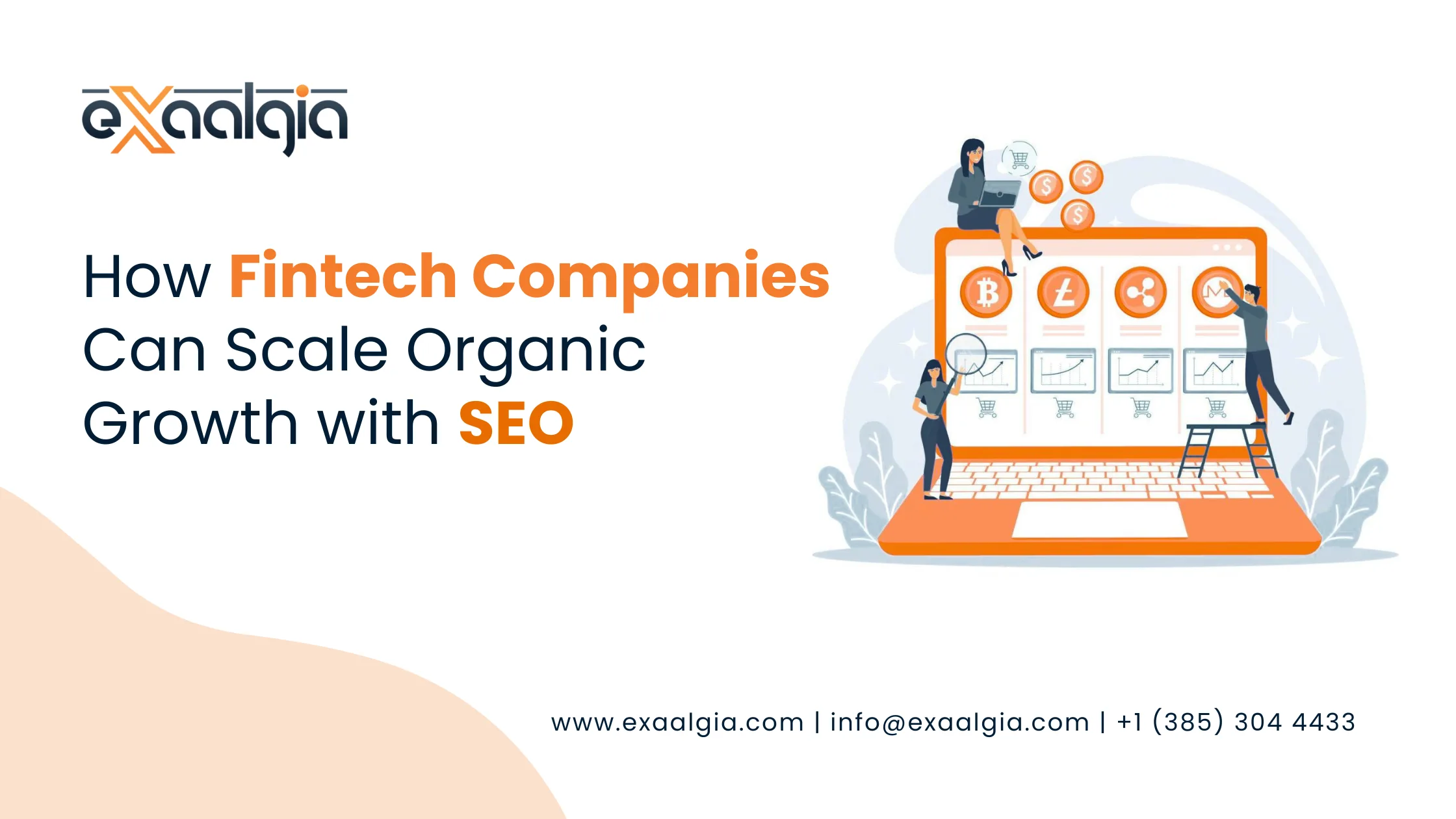
The future of SEO for fintech companies is not about ranking keywords anymore, but about instilling trust, proving expertise and providing smooth digital experiences. Intelligent search engines, zero click searches, more rigorous content analysis mean that the smarts and technicality of fintech brands should be applied to SEO.
Here is the guide to help you know all you need to know to have a future proof fintech SEO strategy.
Why Is Fintech SEO Different from Standard B2B or SaaS SEO?
Fintech SEO is a business that operates in a highly sensitive and competitive online space. These companies work with money, data, and financial decisions of users unlike traditional SaaS or B2B industries, where trust is ranked highly.
1. Increasing Trust Requirement (E-E-A-T)
Fintech is categorized by search engines as part of YMYL (Your Money or Your Life). This implies that your content has to show:
- Real expertise
- Author credibility
- Properly prepared financial reports.
- Transparent sources
Even quality content that has been written can find it difficult to rank in the absence of good E-E-A-T signals.
2. Compliance and Regulatory Problems
Financial regulations should be consistent with fintech content and restrict:
- Over promotional messaging
- Misleading claims
- Aggressive CTAs
This renders SEO content more informative and belief based as opposed to the sales oriented kind.
3. Very Competitive Keywords
Keywords like:
- “Investment platforms”
- “Digital banking solutions”
- ‘Crypto trading apps”
are controlled by powerful actors. Ranking needs high quality content, good back links, and technical excellence in Fintech SEO strategy.
4. User Intent Is More Critical
Users of fintech are regularly making high-stakes choices and therefore, intent is significant:
- Informational → Learning
- Commercial → Comparing
- Transactional → Ready to invest or subscribe.
The content of your material ought to be accurate to every level.
Key SEO Strategies for Fintech Companies
Technical excellence, content depth and authority building must be added to the fintech SEO in order to succeed.
1. Strategy of Intent-Driven Keywords
Target keywords that reflect user intent including best fintech app to use as a beginner, secure payment gateway to use in a small business and how to invest correctly online. This assists in drawing in pertinent traffic and enhances conversions as they directly cater to user requirements.
2. Build Topical Authority
Produce content on the main themes such as payments, lending, wealth management, and insurance tech rather than random blogs. This assists the search engines to know what you are good at and enhances general ranking.
3. Good Technical SEO Underpinning
Speedy loading, being mobile, structured data (schema markup) and a secure https site. This enhances search positions as well as user experience.
4. Power In Backlinks
Target financial and industrial websites, reputable and reliable blogs and get high quality backlinks. Good backlinks enhance credibility and improve SEO performance.
How to Build an SEO Strategy for Fintech Companies from Zero
It is necessary to create a disciplined, step-wise approach to building a powerful strategy on fintech companies in terms of SEO. It can be very easy to forget the foundation and to move to content, which is why you may lose time and resources. The trick lies in doing things in the correct order but then making stages overlap with each other to be efficient.
Develop a Powerful Technical Base
Ensuring that your website is technically healthy will be the first move in SEO as a fintech company. Begin by conducting a complete SEO audit to point out and resolve crawlability, indexing and site performance problems. Proper schema markup, optimize core web vitals and ensure that your robots.txt permits search and AI crawlers. Simultaneously, install your analytics tools, such as GA4 to monitor user behavior and Google Search Console to monitor the performance of the search. This step will make sure that your site is prepared to facilitate long term SEO expansion.
Develop Your Content Architecture
Once you have your technical base in place, then concentrate on creating a content structure. Content in SEO of fintech companies should not be on the basis of key word volume, it must be on a user intent and actual financial query basis. Form subject groups around major services such as payments, lending or investments. Detect the gaps with high intentions and create detailed briefs with target keywords, internal linking plan, schema usage, and trust signals (E-E-A-T). This action will make sure that your content is in line with the search engines and the needs of the users.
Implement Quality Content
It is at content creation that your SEO plan of fintech firms strategy begins to show transparent outcomes. Post regular quality publications- 3-4 publications weekly. Every article needs to be optimized to the keywords, formatted in a readable format, and meet the requirements of the financial content (YMYL). Pay attention to accuracy, reliable sources, and elucidations. Simultaneously, make sure your content is properly structured so that it could be successful both as per traditional search solutions and as per AI-based search experiences.
Establish Authority and Trust
One of the largest ranking factors when it comes to fintech companies and the financial sector in particular is authority. Work on getting quality backlinks with the use of digital PR, original research, and expert viewpoint. Being published in credible sources such as financial news websites or industry blogs can help tremendously improve your credibility. References by reputed financial institutions or regulators also enhance your positions and boost rankings as well as trust indicators.
Optimize and Scale
Once your plan is matured, you need to focus on optimization and scaling. Examine the content areas that are doing well and build them larger. Revise pages that do not perform well with more valuable data, layout, and new information. The continuous improvement is important in fintech companies’ SEO, as it is essential to constantly improve the strategy with the help of analytics and search trends. Slowly increase content production and quality and compliance.
Timeline & Expected Results
SEO of fintech companies requires a timeframe; it depends on your position. In case your webpage already possesses some authority, you can expect to see results in 3-4 months. But in the case of new areas, it roughly requires 6-9 months to gain substantial organic momentum.
SEO is a long term investment though it multiplies with time. Month 12 results can be much better than they are during the early months, with usual implementation, many times, 5-10 times better. That is why the well-considered fintech search engine strategy is one of the most effective drivers of growth.
Emerging Trends in Fintech SEO
1. AI Powered Search
Search engines are becoming more intelligent, focusing on search intent and context rather than just keywords.
2. Zero-Click Searches
Optimize for featured snippets and direct answers.
3. Personalization
Deliver tailored content based on user behavior.
4. Video & Visual SEO
Use explainer videos and infographics to engage users.
5. Blockchain & Web3 SEO
As decentralized platforms grow, SEO strategies will evolve accordingly.
What Does a Fintech Site’s Architecture Need to Look Like for SEO?
A well-designed site architecture is a critical component of SEO for fintech companies, impacting both search engine rankings and user experience. For fintech websites, structuring your site with a clear hierarchy is essential. Start with a strong homepage that links to primary service pages such as payments, loans, and investments. This logical flow helps both users and search engines find relevant information quickly, improving engagement and crawlability.
Supporting sections like product features, blogs, resource centers, calculators, and case studies further strengthen the site architecture. These sections guide users through your website while signaling relevance and authority to search engines, which is a key aspect of SEO for fintech companies.
To enhance SEO performance, fintech sites should maintain a clear URL hierarchy, implement robust internal linking between related pages, and use breadcrumb navigation for better usability. Orphan pages that lack internal connections should be removed, as they hinder both crawlability and user experience. A properly structured fintech site not only helps search engines index your content more effectively but also improves user engagement, leading to higher rankings, better conversions, and stronger overall visibility in search results.
Your Next Steps in Fintech SEO
Fintech company SEO is a combination of technology, trust, and strategy. As competition grows and search engine rules become more strict, companies need not only to comply with conventional search engine optimization strategies.
With an emphasis on technical perfection, authoritative content, user experience, and compliance, the fintech companies are able to not only enhance their place in the search results but also establish a long-lasting trust among their users.
The future of fintech brands lies in being innovative, focused on transparency, and providing actual value by means of their online presence.