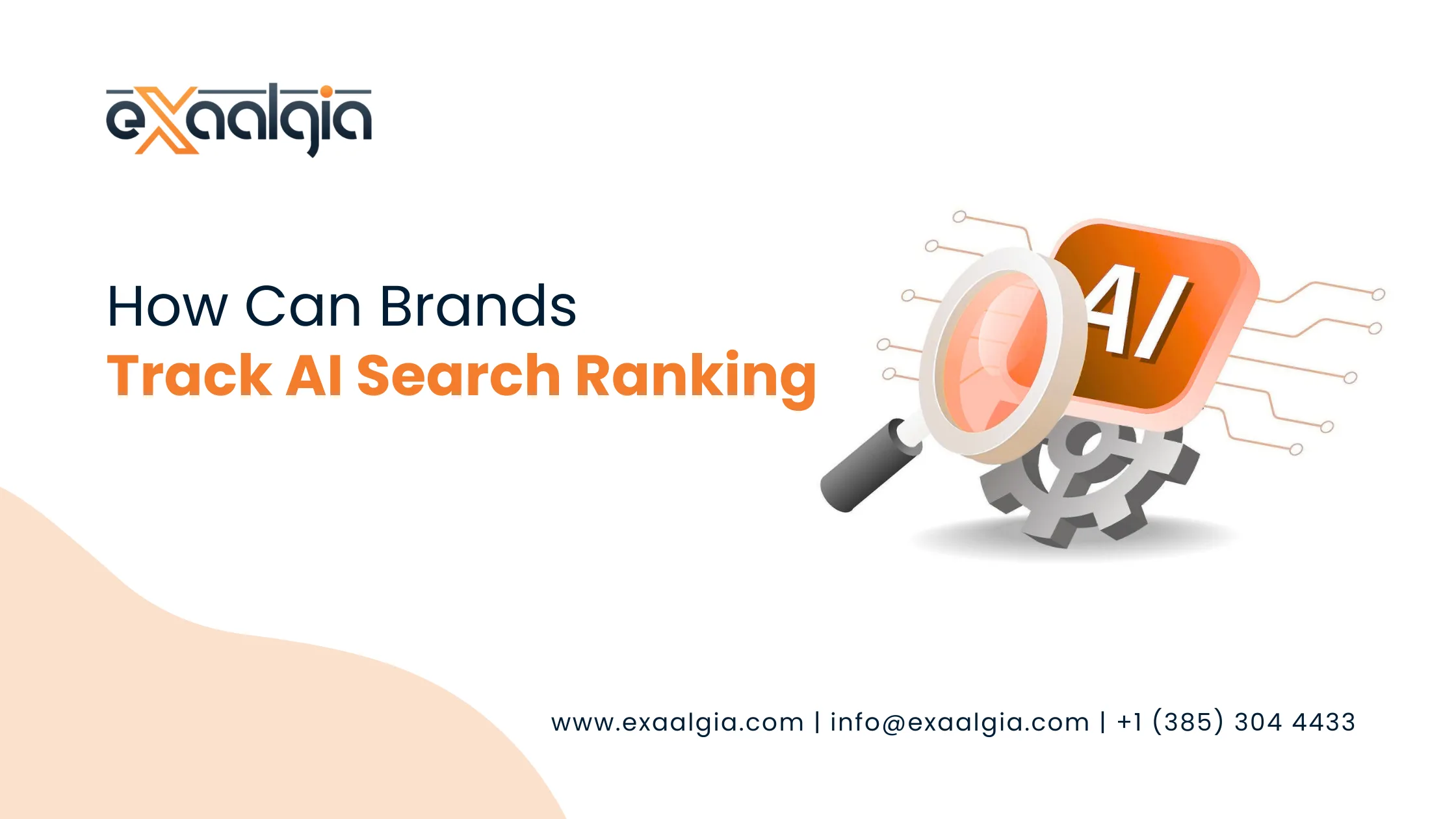
Businesses currently investigate ways to track their AI search rankings while assessing their visibility across AI-powered platforms. Businesses still use traditional SEO metrics to measure performance but AI search visibility requires them to assess new indicators which include citations and contextual inclusion and entity authority and developing AI search trust indicators that determine which brands large language models will present to users.
This guide explains how to properly monitor AI search rankings using the right tools while identifying important metrics and developing your search strategy according to changing user search patterns and maintaining control over vital elements which include local map pack and standard map pack visibility.
How to Measure Your Brand in AI-Powered Search
The process of tracking AI visibility has become essential for organizations because it now serves as a strategic business function. Businesses need to update their monitoring systems because AI search trends have changed how users search for information. Businesses need to track their search engine results through their new system which includes generative answer content instead of using existing static search engine results.
We will explain everything in a detailed manner which contains multiple stages.
Define Your AI Search Target Landscape
The audience search locations must be determined before you start your tracking process. The world currently experiences AI-based discovery through various platforms which include:
- Google’s AI-generated search experiences
- Conversational AI assistants
- AI enhanced Bing results
- AI powered productivity tools
- Industry specific AI search engines
Local businesses need to appear in both local map packs and traditional map packs to maintain their market presence. AI systems extract local business information from established directories, customer feedback, and trusted sources. Your local search engine optimization efforts and AI systems indexing your content from your website work together to create a connection between these two aspects.
Why Platform Selection Matters
Different platforms depend on their specific data sources and their unique ranking methodologies for their operations. Some systems give priority to:
- Structured data
- Entity recognition
- Brand authority
- Backlink profiles
- Topical depth
- Content clarity
If your customers use B2B decision making tools which operate through integrated AI systems that work with enterprise software. Your main competition will occur through AI-driven Google results and map pack visibility because you provide services to local customers.
First establish your primary platforms. After that you need to develop your tracking strategy to match those platforms.
Choose Between Automation and Hands-On Tracking
The two methods available for observing AI activities include:
- The first method involves using human observers for tracking purposes.
- The second method requires using specialized software tools for tracking artificial intelligence activities.
Manual Tracking
The process of manual tracking requires:
- Running prompts in AI search tools
- Recording whether your brand appears
- Analyzing citation patterns
- Comparing competitor inclusion
The method operates effectively with a limited number of keywords but becomes unworkable when handling a larger volume.
Tool Based Tracking
Specialized platforms deliver automated systems which handle both monitoring tasks and reporting functions. Sustainable visibility requires professional tracking tools to correctly monitor AI search rankings across multiple prompts which may range from dozens to hundreds of search terms.
These tools provide:
- Visibility scoring
- Competitor comparison
- Prompt-based performance analysis
- Citation tracking
- Historical data trends
Manual methods cannot match this level of depth or consistency.
Track Intent-Driven AI Search Prompts/Queries/Keywords
AI search is prompt-driven. Users ask conversational questions instead of typing fragmented keywords.
Instead of tracking:
“best CRM software”
You may need to track:
- What CRM is best for startups under $100 per month?
- Which CRM integrates with email marketing tools?
- Top CRM platforms for remote sales teams?
Categories of Prompts to Monitor
- Informational Prompts
Educational queries that build thought leadership. - Commercial Investigation Queries
Comparison-based prompts where AI summarizes options. - Local Intent Searches
Critical for businesses competing in the map pack and local map pack, such as:
- Best HVAC repair near me
- Top rated digital marketing agency in USA
- Brand + Comparison Prompts
- Is [Your Brand] better than [Competitor]?
- [Your Brand] pricing and reviews
Strategic prompt tracking is one of the core pillars of AI Search Optimization, because AI platforms evaluate topical authority and contextual depth rather than just exact-match keyword placement.
Identify Source Citations and Mentions in AI Answers
The AI platforms produce synthetic answers which depend on established trustworthy sources. Your brand visibility now depends on three main factors, which include AI summary references, curated list appearances, and authority citations, as well as your ability to establish digital presence.
Types of AI Mentions to Monitor
- Direct brand mentions
- Product references
- URL citations
- Expert commentary
- Data-driven insights
When you track AI search rankings, evaluate both frequency and positioning. Are you mentioned as a leading option? Or listed after competitors?
AI engines prioritize credibility indicators such as structured data, authoritative backlinks, expertise signals, and consistent brand presence across high quality domains. These collectively form what many marketers refer to as AI search trust signals.
Identify Core KPIs for AI Search Performance
The current performance framework needs modern updates because AI visibility needs better assessment methods.
Here are the essential metrics:
1. AI Visibility Score
This metric shows how often your brand appears in all monitored search queries.
2. Citation Frequency
It shows how frequently AI systems use your material as a source.
3. Share of Voice
It metric shows how often you appear in comparison to your industry rivals.
4. Sentiment Placement
This method shows whether your brand receives positive or negative customer reviews.
5. Local Inclusion Rate
It holds special importance for businesses which aim to achieve local map pack and map pack visibility.
6. Prompt Coverage
This metric shows how many tracked prompts include your brand.
The practice of tracking these metrics on a regular basis enables you to identify successful elements while determining which areas require enhancement.
AI Search Analytics Platforms to Watch
The development of generative search has led to multiple platforms establishing AI focused tracking.
Semrush
Semrush offers keyword tracking, brand monitoring, and local SEO tools that help users implement AI-based optimization methods.
Key Benefits:
- Competitor benchmarking
- SERP feature tracking
- Map pack monitoring
- Backlink analysis
- Authority measurement
For businesses blending traditional SEO with AI monitoring, Semrush provides foundational insights.
Ahrefs
Ahrefs Brand Radar monitors brand mentions across the web, critical because AI systems rely on third party credibility signals.
Features include:
- Mention tracking
- Authority gap analysis
- Content opportunity discovery
- Competitive comparisons
Strong mention profiles increase AI inclusion likelihood.
SE Ranking AI Visibility Tracker
SE Ranking offers AI specific monitoring capabilities.
Highlights:
- Prompt tracking
- AI result visibility reporting
- Historical comparison
- Competitor benchmarking
Ideal for agencies managing multiple campaigns.
OmniSEO
OmniSEO® focuses on AI first tracking frameworks and prompt based performance monitoring.
Capabilities include:
- AI citation tracking
- Generative answer monitoring
- Competitive intelligence
Surfer SEO AI Tracker
Surfer SEO integrates content optimization with AI aware tracking.
Benefits:
- Content scoring
- On-page improvement suggestions
- Competitive analysis
- SERP data insights
Optimized content improves inclusion probability in AI-generated answers.
Rankscale.ai
Rankscale.ai specializes in AI ranking measurement.
Key Features:
- Prompt based answer tracking
- Brand presence scoring
- Competitive AI benchmarking
- Custom reporting dashboards
Outsource AI Search Tracking to Specialists
The collaboration between businesses and digital marketing agencies with expertise in AI visibility will help organizations that lack internal resources and expertise to achieve their goals. Exaalgia assists brands in building AI-optimized content frameworks and improving structured data implementation while strengthening their authority signals.
The agency conducts tracking activities while it maintains a primary focus on executing its strategic plans. The team will establish authoritative content which will improve local SEO to boost map pack results while maintaining citation accuracy. The combination of tracking and active optimization processes will deliver visibility improvements that result in tangible business growth.
FAQs
1. What does it mean to track AI search rankings?
It means monitoring how often and how prominently your brand appears in AI-generated responses, summaries, and citations across AI-powered platforms.
2. Is AI ranking different from traditional SEO ranking?
Yes. Traditional SEO focuses on webpage positions in SERPs. AI ranking evaluates brand inclusion, authority signals, citation presence, and contextual relevance within generated answers.
3. How often should I monitor AI visibility?
Monthly tracking is recommended. Competitive industries may require weekly analysis to respond to shifts in AI Search Trends.
4. Does local SEO still matter in AI search?
Absolutely. AI systems often pull local business data from structured listings and map pack results. Strong local SEO directly supports AI inclusion.
5. Can small businesses compete in AI-driven search?
Yes. By focusing on topical authority, structured content, reviews, citations, and consistent optimization, small businesses can strengthen their presence and effectively track AI search rankings for measurable growth.