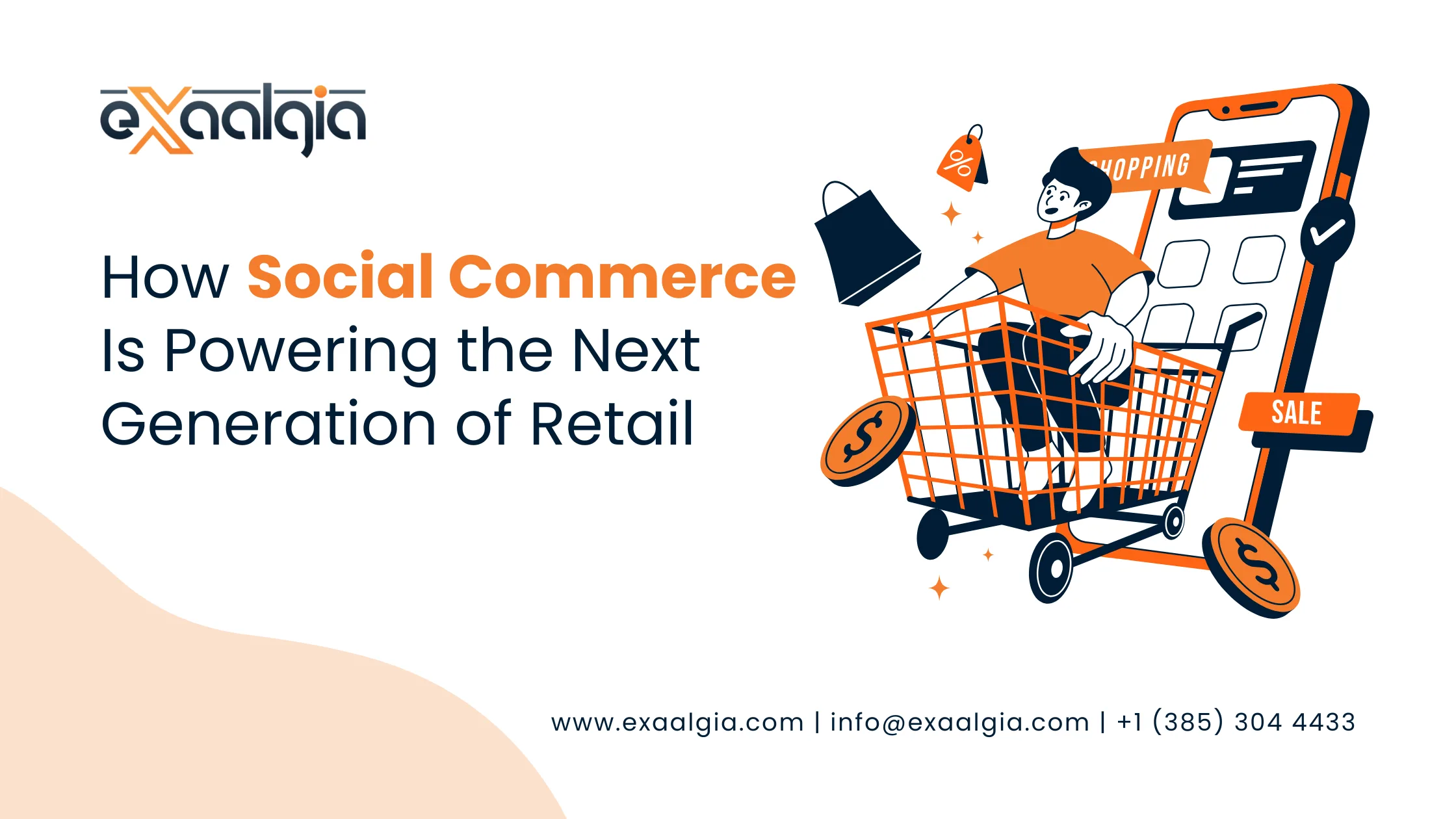
Social networking sites are not merely places to communicate, peruse and be entertained any longer. They have progressively transformed into an ultra-fast digital market where discovery, interaction, and purchase all occur in one uninterrupted flow. This transition mixes content, community, and commerce into a single hassle free experience.
This in-depth guide will delve into the reasons for social commerce being the most significant retail development of the decade and the ways your brand can tapping its potential.
What Is Social Commerce? Why Is It Important?
Social commerce refers to the practice of directly buying and selling goods and services from and to social media platforms. Unlike traditional online commerce, wherein the click of the user leads to an external site, the entire transaction process occurs in the app itself.
Why It Is Important Now
What is significant about this transition is that it can monetize attention. In the year 2025, an average individual spends over 140 minutes daily on social media platforms. With this transition that “stores” are in “scrolls,” brands are capitalizing on impulse intent when it is at its strongest in-app purchases.
Friction Reduction: Every additional click gives a second thoughts opportunity to a consumer. Social commerce eliminates the problem “click fatigue” because social commerce has a native, one click checkout option.
Cultural Relevance: Sites such as TikTok or Instagram are not merely applications, they are hubs of culture. When brands can be considered “shoppable” where culture is being produced, brands come across as authentic as opposed to intrusive.
Mobile Optimization: The main reason this applies to our list of top ecommerce solutions is because of the prevalence of mobile commerce. What this means is that by building your store specifically for mobile, you are going to enjoy the best possible usability experience.
How Social Commerce Can Boost Sales and Engagement
For brands, a shift towards a specific social commerce approach can mean more than just having a new sales platform, it means a more efficient means of launching a successful business.
Shorter Path to Purchase
The classic marketing funnel keeps getting smaller. In the social ecosystem, “Awareness,” “Consideration,” and “Purchase” can occur in the span of a single 15 second Reel. This translates to an increase in conversion rates coupled with a decrease in the cost of acquiring customers.
Unprecedented Social Proof
When shopping in a brick and mortar store, you see a badge called the “top seller.” On the other hand, you see thousands of likes as well as reviews shared immediately. This user-generated content has the biggest appeal as the greatest marketing tool available in the year 2025.
Direct Audience Insights
Social commerce provides the element of “living data.” Not only do you see a sale happen, but you see the communication that goes along with that sale. The social media community offers marketers ways to analyze comments and direct messages that will help marketers immediately change strategies if needed.
Leading Platforms Driving Social Commerce Growth
Deciding which social commerce platforms to use is entirely reliant on where your preferred demographic spends time online.
TikTok: The Viral Sales Engine
The TikTok shop has turned into a mammoth overnight. It gives a viral platform to the products by the sheer creativity of the public.
Key Feature: Seamless integration with creators, making it the hub of current influencer marketing.
Instagram: Visual Storytelling
Instagram is the “Vogue” of social selling. Its visually driven interface makes it the top choice for aesthetics.
Key Feature: Shopable posts enable the user to find the price and “Buy” button of the item by tapping on the product immediately in the image.
Pinterest: The High-Intent Planner
The users of Pinterest are unique, as they use this platform when planning their future purchases.
Good for: Home decor, DIY, and fashion retailers who need high intent shoppers.
Top Social Commerce Trends to Watch
The landscape changes at warp speed. These are the trends in social commerce that are shaping 2026.
Live Commerce & “Shopertainment
Live commerce has progressed from being a novelty to a billion dollar subindustry. Brands are conducting live question answering sessions and product unveilings that spread maximum urgency and excitement.
AR Shopping & Virtual Try-Ons
“Will this lipstick look good on me?” Thanks to the AR shopping filters, all these questions are now being answered. In 2026, 3D product visualization has become the norm and minimum requirement in social shopping for high converting online stores.
AI Chatbots as Personal Shopper
“Sophisticated” AI is now residing in your DMs. These bots are capable of recommending sizes based on past orders and even processing returns, all within the chat, where they optimize the “conversational commerce” experience.
How Social Commerce Differs From Traditional eCommerce
Although both can be classified under the “online shopping” category, the technical and psychological bases are quite different.
| Feature | Traditional eCommerce | Social Commerce |
| Primary Platform | Branded Website / Marketplace | Social Media App (IG, TikTok, etc.) |
| User Intent | Intent-Led (Search $\rightarrow$ Buy) | Discovery-Led (Scroll $\rightarrow$ Buy) |
| Path to Purchase | Multi-step (External Redirects) | Single-step (In-app purchasing) |
| Marketing Style | Traditional SEO/SEM | Social media marketing & UGC |
Social Commerce Stats That Matter
Market Growth: The global social commerce market is anticipated to reach 2 Trillion by the end of 2026.
Consumer Influence: Over 86% of online users claim they made a purchase online as a result of social media.
Video Dominance: 89% of consumers feel that watching a video of a brand has convinced them to make a purchase.
Mobile Dominance: More than 70% of social shopping is done through mobile phones. This validates the need for optimizing mobile commerce.
Why to Give Social Commerce a Try
Barrier to Entry: It isn’t necessary for you to have an elaborate website because you can open the store right inside Facebook or Instagram.
Viral Potential: A creative video may generate thousands of sales in a matter of hours.
Better Customer Loyalty: Engagement via comments and direct messages establishes an emotional connection.
Cost-Effective Feedback: Conduct polled testing regarding new product concepts prior to manufacturing on a mass production basis.
Direct-to-consumer Power: Bypassing traditional retailers to build a direct relationship with your fans.
Social Commerce Takeaways for Marketers
Contrary to a new shopping method, social commerce is the humanization of retail. With a structured approach that combines the use of shoppable posts, live commerce, and influencer marketing, businesses can shine in a world where community will be the currency. The future of shopping isn’t a final destination. The future of shopping is a conversation.
FAQ’s
Q1: No, social commerce is different from social media marketing.
No. Social media marketing is where you bring traffic to the website. Social commerce is where you complete the sale in the app.
Q2: How does influencer marketing relate to this scenario?
Social influencers are considered the “store associates of the online era.” They are necessary for building the content and trust required for social shopping.
Q3: Is in-app purchase secure?
Yes. Major sites employ industry standard encryption. The major sites also partner with established gateways, such as Shopify.
Q4: What are the main trends in social commerce in 2026?
The top trends include live commerce, AR shopping (virtual try-ons), and the rise of micro influencers over celebrities.
Q5: Can my existing website be synchronized with Social Commerce platforms?
Absolutely! Most of the current digital e-commerce solutions (Shopify, BigCommerce, etc.) have integration capabilities for managing your inventory across every social media channel.